

 English
 日本語
日本語 Español
What Foam Rolling Actually Does for Your Yoga Practice
A foam roller works by applying sustained pressure to the fascia — the connective tissue surrounding muscles — breaking up adhesions and releasing tightness that limits range of motion. In the context of yoga, this matters because poses like pigeon, seated forward folds, and shoulder-opening stretches require the kind of deep tissue mobility that static stretching alone rarely achieves.
The technique behind foam rolling is called self-myofascial release (SMR). Research published in the Journal of Athletic Training found that SMR before activity increases joint range of motion without reducing muscle force output — a key concern with pre-workout static stretching. For yogis, this means rolling before practice can improve hip and spinal mobility so you reach deeper positions with less strain.
Used after practice, the roller accelerates recovery by improving local blood circulation and reducing delayed-onset muscle soreness (DOMS). Athletes who incorporated SMR post-exercise reported up to a 30% reduction in perceived soreness at 48 and 72 hours post-training compared to those who stretched only.
How to Use a Roller for Muscles: Core Technique
Using a foam roller correctly is not complicated, but the details make a significant difference in both safety and effectiveness. Follow these principles regardless of which muscle group you're targeting:
- Move slowly. Roll at a pace of about 1 inch per second. Fast rolling does not allow the fascia time to respond and release.
- Find tender points and pause. When you locate a knot or area of tension, stop and hold steady pressure for 20–30 seconds until the sensation softens — this is the release.
- Control your body weight. Use your arms or a supporting leg to offload pressure as needed. Especially over the IT band and lower back, the roller should feel like firm pressure, not sharp pain.
- Breathe through it. Deep, steady breathing activates the parasympathetic nervous system, which helps muscles relax under pressure.
- Roll proximal to distal. Work from areas closer to the torso toward the extremities to encourage fluid movement in the direction of lymphatic drainage.
What to avoid: Never roll directly over joints, bones, or the lumbar spine. Rolling over the lower back vertebrae can hyperextend the spine and cause injury. Instead, roll the thoracic spine (mid-back) and target the surrounding muscle groups like the glutes and hip flexors to indirectly relieve lower back tension.
Essential Yoga Foam Roller Exercises by Body Zone
These yoga foam roller exercises target the areas most commonly restricted in practitioners — hips, thoracic spine, hamstrings, and shoulders.
Hip Flexors and Quads
Place the roller under your right hip and upper thigh while in a modified plank. Slowly roll from the hip crease to just above the knee, pausing on any tight spots. This releases the psoas and rectus femoris — muscles that shorten with prolonged sitting and limit warrior and lunge depths. Spend 60–90 seconds per side before transitions into low crescent or half splits.
Thoracic Spine Extension
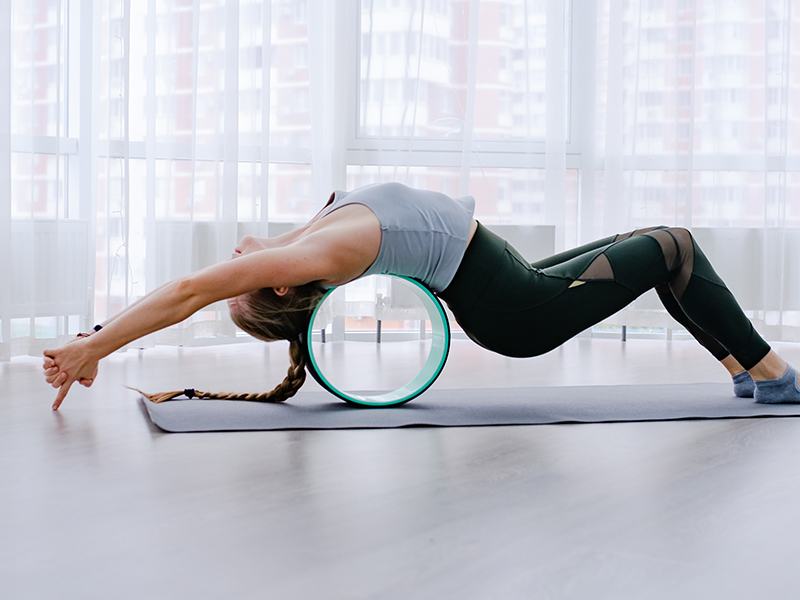
Sit on the floor with the roller placed horizontally behind you at mid-back level. Support your head with interlaced fingers, then hinge back gently over the roller to create a passive extension. Shift it up one vertebra at a time from T5 to T12. This counteracts the forward rounding that builds during seated desk work and prepares the spine for wheel pose (urdhva dhanurasana), fish pose, and camel.
Hamstrings and Posterior Chain
Sit with the roller placed under both thighs, hands behind you for support. Slowly roll from the sitting bones down to just above the back of the knee. For a more targeted release, cross one ankle over the other to concentrate pressure on a single leg. Looser hamstrings directly improve forward folds (uttanasana, paschimottanasana) and seated straddle work.
Glutes and Piriformis
Sit on the roller and cross your right ankle over your left knee (figure-4 position). Shift weight toward the right glute and roll in small circles. The piriformis is a deep hip rotator that, when tight, limits external rotation in pigeon pose and seated twists. A 2-minute release per side before practice noticeably opens the hip socket.
Lats and Thoracic Side Body
Lie on your side with the roller under your armpit area, arm extended overhead. Roll from the armpit down toward the lower ribs. This targets the latissimus dorsi — a common restriction in overhead shoulder poses like downward dog, warrior I arm reach, and side-body stretches. Keep your core engaged so the spine doesn't sag during the roll.
Integrating the Foam Roller Into a Yoga Session: Before vs. After
| Timing | Duration | Primary Goal | Best Target Areas |
|---|---|---|---|
| Pre-practice | 5–10 min | Increase joint ROM, release chronic tension | Hip flexors, thoracic spine, lats |
| Post-practice | 10–15 min | Recovery, reduce soreness, cool down | Glutes, hamstrings, calves, quads |
| Rest day | 15–20 min | Deep myofascial work, full body maintenance | Full posterior chain, shoulders |
A pre-practice roll focuses on unlocking the specific areas you'll stress during that session — if you're working on backbends, prioritize the thoracic spine and hip flexors. If it's a deep hamstring day, roll the posterior chain. Keep pre-practice rolling to 20–30 seconds per spot to stimulate without fatiguing the tissue.
Post-practice rolling can be slower and deeper. The muscles are already warm and pliable, making this the ideal time to work out accumulated tension from held poses. Pairing 5 minutes of rolling with 5 minutes of supine yin stretches (supported bridge, supta baddha konasana) creates a highly effective cooldown sequence.
Choosing the Right Foam Roller for Yoga
Not all foam rollers are equal for yoga applications. Density, texture, and size each affect how the tool interacts with muscle tissue.
- Smooth, medium-density rollers — Best for beginners and those with sensitivity. They provide even pressure across larger muscle groups and are suitable for thoracic spine work where surface area matters.
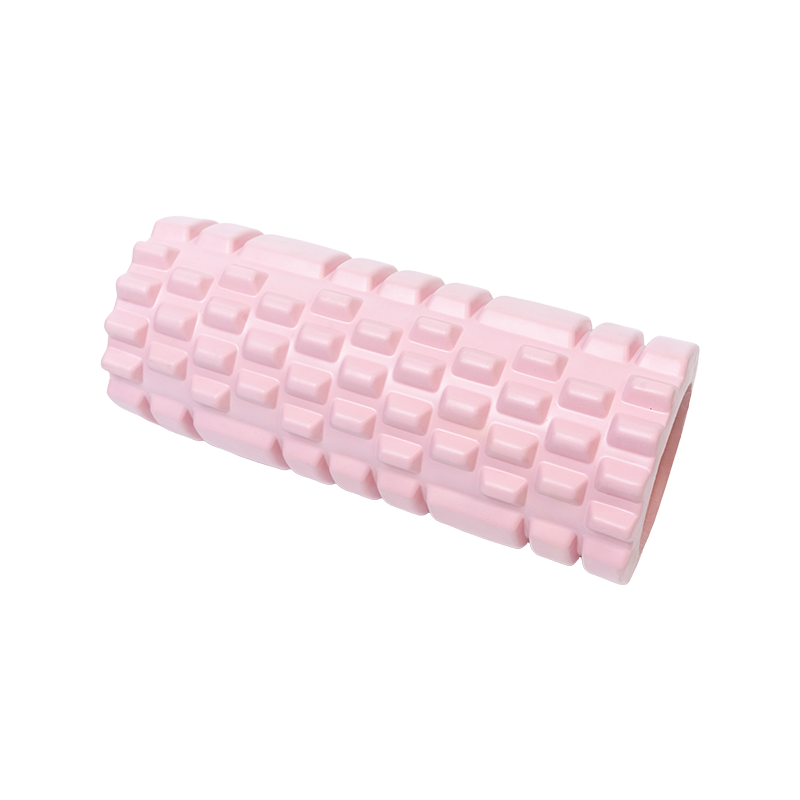
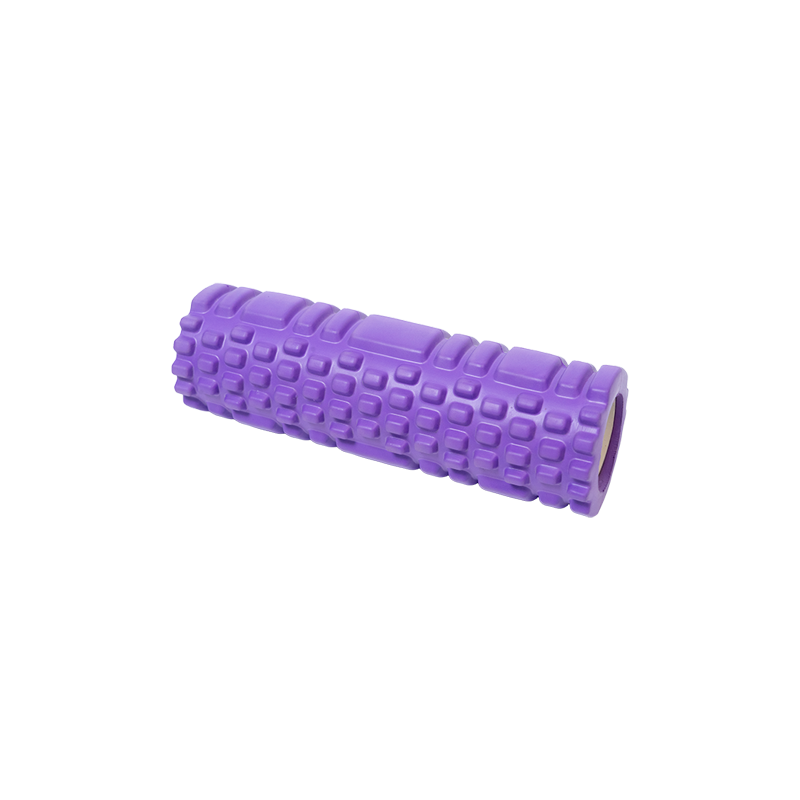
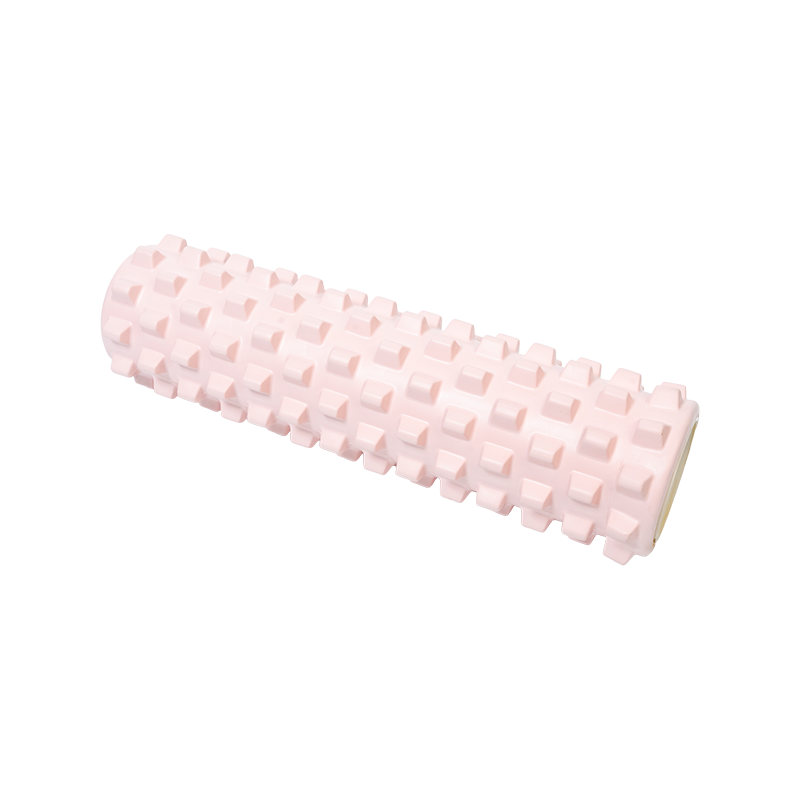
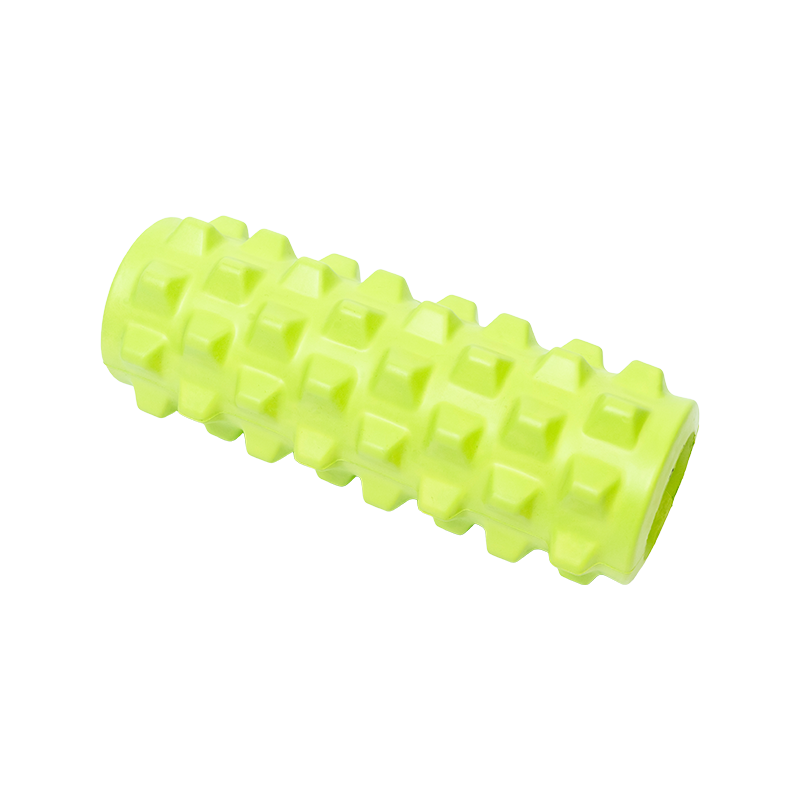
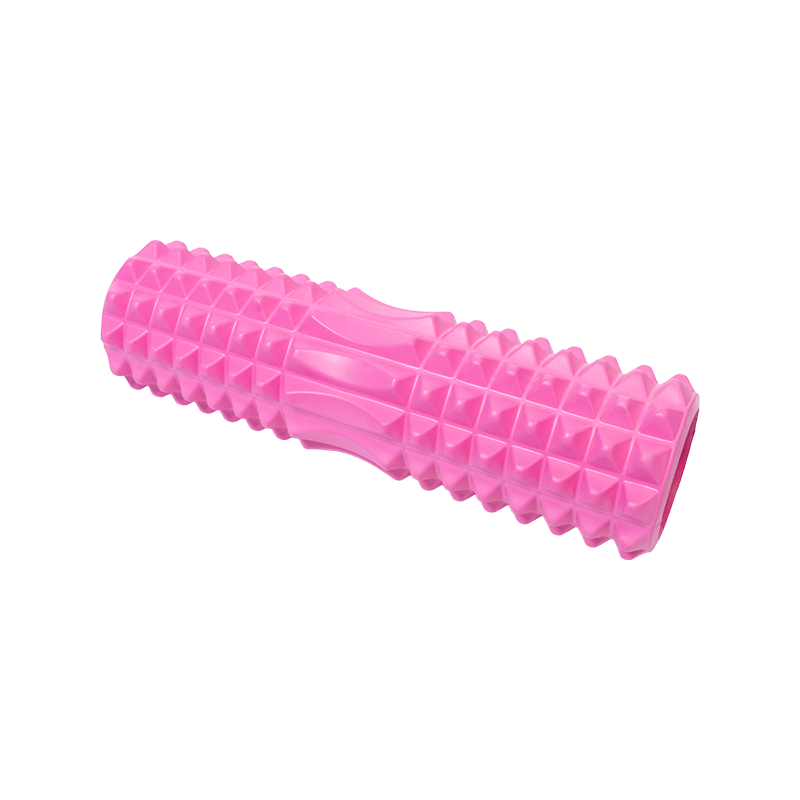
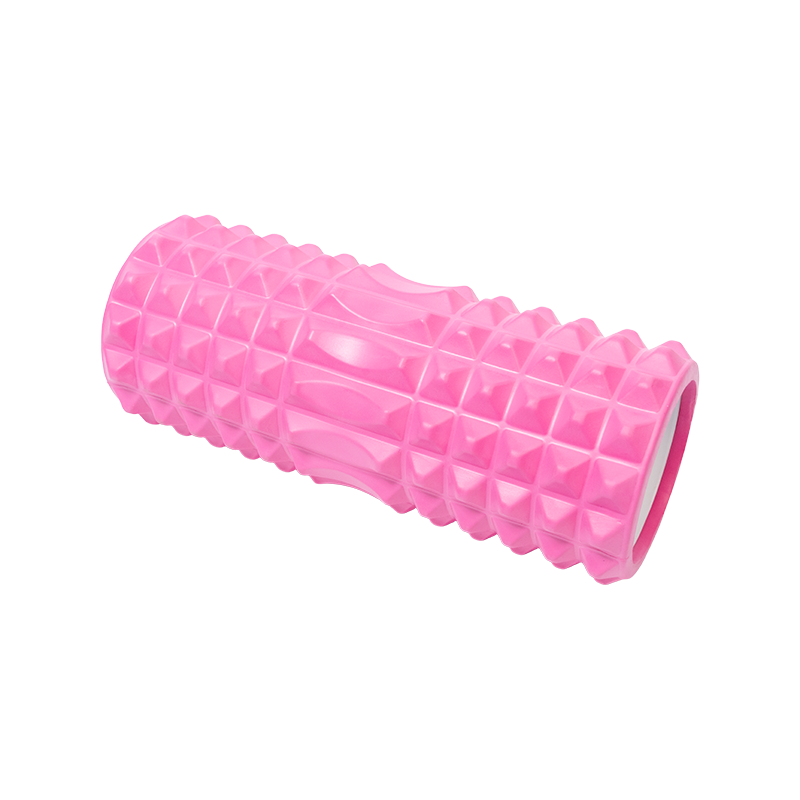
- Grid or textured rollers — The raised patterns simulate the pressure of fingertips and knuckles, reaching deeper into the muscle belly. Effective for glutes, quads, and IT band work.
- High-density (firm) rollers — Recommended for experienced practitioners or athletes with higher tissue tolerance. They provide the deepest release but can cause bruising if overused on sensitive areas.
- Half-round rollers — Flat on one side, these offer stability for balance work and are useful for proprioceptive exercises that can complement yoga balance training.
- Standard length (90 cm / 36 inches) — Preferred for yoga because it supports the full length of the spine during thoracic extension work. Shorter rollers (45 cm) are more portable but less versatile for spinal rolling.
For most yoga practitioners, a 90 cm smooth or light-grid medium-density roller covers all practical needs — hip, spinal, shoulder, and hamstring release — without being excessively aggressive on tissue.