

 English
 日本語
日本語 Español
How to Use a Pilates Ring Effectively
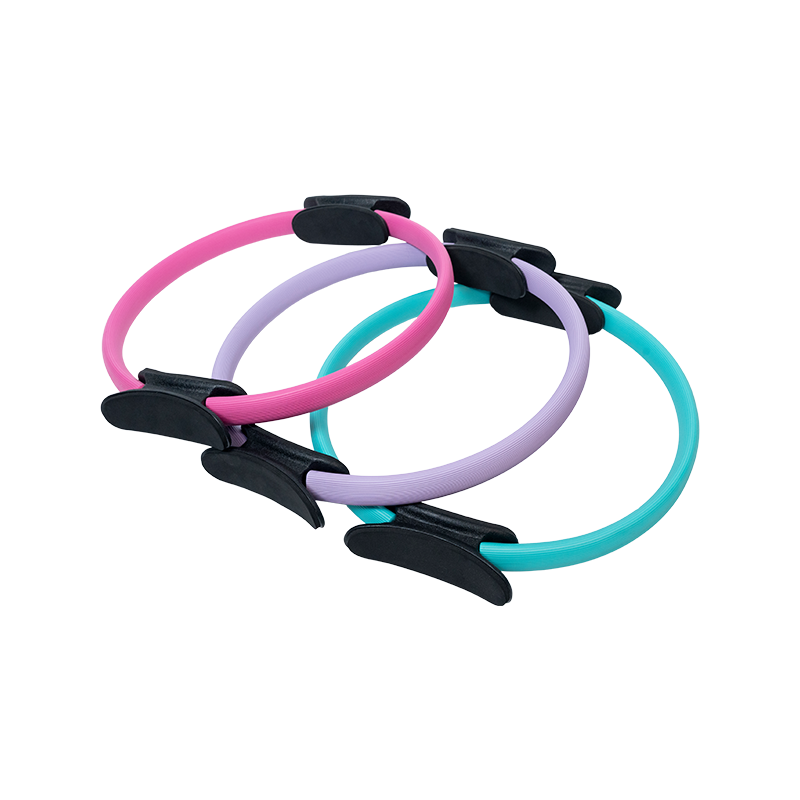
A pilates ring—also called a magic circle—is a flexible resistance loop, typically 13–15 inches in diameter, with two padded handles positioned opposite each other on the rim. The ring is made from carbon steel or fiberglass wrapped in a resilient material that allows it to compress under pressure and spring back without deforming. Resistance is created when you squeeze or press the ring between body parts, engaging the target muscles isometrically or through a controlled range of motion.
Before starting any pilates ring exercise, understanding how to generate and control resistance correctly prevents both ineffective movement and unnecessary joint strain. The ring should be compressed with smooth, sustained pressure rather than quick pulses—think of pressing inward as you exhale and releasing slightly as you inhale, keeping the engagement continuous rather than releasing fully between repetitions. Most exercises call for 8–12 repetitions or sustained holds of 10–30 seconds, with 2–3 sets depending on fitness level.
Placement is equally important. The padded handles are designed to contact the fleshy parts of the inner thighs, inner ankles, palms, or the sides of the knees—not bony prominences. Incorrect placement concentrates pressure on joints and reduces the muscular engagement the exercise is designed to produce. Take a moment before each exercise to position the ring deliberately rather than rushing into the movement.
Ring resistance levels vary by manufacturer—light, medium, and firm options are available. For core and ab work, medium resistance is appropriate for most users. Inner thigh exercises, which engage larger muscle groups, benefit from medium to firm resistance. Beginners should start with light or medium resistance and focus on movement quality before progressing to firmer options.
Pilates Ring Core Exercises
Core work with a pilates ring goes beyond abdominal crunches. Adding ring resistance to classical pilates positions intensifies deep stabilizer engagement—the transverse abdominis, multifidus, and pelvic floor—that standard floor exercises can underload. The following exercises are foundational for pilates ring core training.
Standing Squeeze with Pelvic Tilt
Stand with feet hip-width apart and place the ring between your inner thighs just above the knees, handles facing inward. Maintain a neutral spine and engage your lower abdominals by drawing the navel gently toward the spine. Exhale and squeeze the ring with your inner thighs while simultaneously performing a small posterior pelvic tilt—tilting the pelvis slightly under to activate the lower core. Hold 2–3 seconds, inhale to release slightly, and repeat 10–12 times. This exercise trains the coordination between the adductors, pelvic floor, and deep abdominals that underlies most functional movement patterns.
Supine Ring Press — Hands Overhead
Lie on your back with knees bent and feet flat on the floor. Hold the ring between both palms and extend your arms toward the ceiling directly over your chest. Press the ring between your palms with moderate force and maintain that pressure throughout the exercise. From this position, slowly lower your arms overhead toward the floor (only as far as your lower back remains flat), then return to the start. The arm movement challenges the core to resist extension loading while the ring press adds upper body co-contraction, increasing total core recruitment compared to an unloaded equivalent. Perform 8–10 repetitions.
Supine Ring Press — Between Knees
Lie on your back with knees bent and place the ring between the inner sides of your knees. Extend both arms alongside your body with palms facing down. Engage your core, then lift your hips into a bridge position by pressing through your heels. While in the bridge, squeeze the ring with your knees continuously and hold for 5–8 seconds before lowering with control. The simultaneous bridge and ring squeeze connects glute, hamstring, adductor, and deep core activation into a single integrated exercise. Complete 8–10 repetitions.
Seated Spine Twist with Ring Press
Sit upright on the floor with legs extended and crossed lightly at the ankles. Hold the ring between both palms at chest height with elbows slightly bent. Press the ring continuously and rotate your torso to one side, keeping hips square and spine tall. Hold the rotated position for 2–3 seconds, return to center, and rotate to the other side. Maintaining ring pressure during rotation prevents the shoulder girdle from compensating for weak rotator engagement, directing the work into the obliques and thoracic rotators. Perform 8 repetitions per side.
Pilates Ring Ab Exercises
Pilates ring ab exercises specifically target the rectus abdominis, obliques, and transverse abdominis by adding resistance at the point of greatest challenge in each movement. The result is more concentrated abdominal work in fewer repetitions than standard mat exercises.
Ring-Assisted Hundred
Lie on your back and curl your head and shoulders off the mat into a classic pilates curl-up position, with your chin dropped slightly toward the chest and gaze directed at your knees. Place the ring between your inner thighs just above the knees and squeeze. Extend your legs at a 45-degree angle (or higher for beginners) and pump your arms vigorously at your sides—five pumps on an inhale, five on an exhale—for a count of one hundred. The ring squeeze between the thighs connects the lower abdominals and adductors, preventing the common compensation of the hip flexors dominating the position. Keep the squeeze consistent throughout all one hundred counts.
Ring Roll-Up
Lie flat with legs extended and hold the ring between both palms above your chest, arms toward the ceiling. Inhale to prepare, then exhale as you articulate your spine off the mat one vertebra at a time, reaching the ring toward your feet as you roll forward into a seated C-curve. Maintain light-to-moderate ring pressure throughout the movement—the resistance increases abdominal engagement during the most mechanically challenging portion of the roll-up, just past horizontal. Inhale at the top, then exhale as you roll back down with the same segmental control. Begin with 5 repetitions and build to 8–10.
Oblique Curl with Ring
Lie on your back with knees bent and feet flat. Hold the ring between both palms and extend your arms toward the ceiling. From your curl-up position, rotate your upper body toward your right knee while reaching the ring diagonally across the body. The ring press during the rotational movement prevents shoulder and neck tension from substituting for oblique engagement—a common fault in unloaded oblique crunches. Return to center and repeat to the left side. Perform 10 repetitions per side in alternating fashion.
Double Leg Stretch with Ring
From a supine curl-up position, place the ring between the inner ankles and squeeze gently. Draw both knees toward your chest, then exhale as you extend both legs out to a 45-degree angle while reaching your arms alongside your ears. The ring held between the ankles adds adductor co-contraction to the already demanding double leg stretch position, increasing lower abdominal loading during leg extension. Inhale to draw knees back to chest and repeat 8–10 times. Keep your lower back anchored to the mat throughout—if it lifts, raise the leg angle toward 60–70 degrees.
Pilates Ring Ab Workout: A Structured Sequence
The following workout sequences the ab exercises above into a complete routine. It takes approximately 20–25 minutes and requires only a mat and a pilates ring. Rest 30–45 seconds between exercises and 60–90 seconds between rounds if completing multiple circuits.
- Ring-Assisted Hundred — 100 counts (full sequence), focus on sustained inner thigh squeeze and stable curl-up position.
- Ring Roll-Up — 8 repetitions, prioritizing spinal articulation over speed.
- Supine Ring Press — Hands Overhead — 10 repetitions, maintaining flat lower back throughout arm lowering.
- Double Leg Stretch with Ring — 10 repetitions, adjusting leg angle to keep lower back anchored.
- Oblique Curl with Ring — 10 repetitions per side, alternating, emphasizing rotation from the ribcage rather than the neck.
- Supine Ring Press — Between Knees Bridge — 10 repetitions, 5-second hold at the top of each bridge.
- Seated Spine Twist with Ring Press — 8 repetitions per side, maintaining tall spine and square hips.
Beginners should complete one round of this sequence three times per week. Intermediate practitioners can progress to two rounds or add a second session mid-week. Progression over time comes from increasing ring resistance, slowing the tempo of each exercise, or extending holds—not from adding excessive repetitions, which typically degrades form before it meaningfully increases the training stimulus.
Inner Thigh Exercises with a Pilates Ring
The inner thigh muscles—collectively the hip adductors, comprising the adductor longus, adductor magnus, adductor brevis, gracilis, and pectineus—are among the most consistently undertrained muscle groups in standard exercise programs. The pilates ring is one of the few portable tools that allows direct, isolated adductor loading without machines. The following exercises address the adductors across multiple joint angles and positions.
Supine Inner Thigh Squeeze
Lie on your back with knees bent and feet flat on the floor. Place the ring between the inner thighs just above the knees with the handles oriented inward. Engage your core, relax your neck and shoulders, and exhale as you squeeze the ring with maximum inner thigh engagement. Hold 5 seconds, release to about 70% tension, and repeat without fully releasing tension between repetitions. This approach—maintaining partial tension rather than releasing completely—keeps the adductors under load throughout the set and produces significantly greater fatigue than full release repetitions. Complete 12–15 repetitions.
Standing Inner Thigh Squeeze
Stand with feet slightly wider than hip-width and place the ring between the upper inner thighs. Hold a wall or chair back lightly for balance if needed. With a slight bend in the knees and your weight evenly distributed, exhale and draw your inner thighs toward each other to compress the ring. Avoid gripping through the glutes or rotating the pelvis—the movement should be felt exclusively in the inner thighs. Hold 3–4 seconds per repetition and complete 12–15 repetitions. The standing position loads the adductors in their functional role as stabilizers during weight-bearing activity, making this variation transferable to walking, running, and athletic movement patterns.
Side-Lying Inner Thigh Lift with Ring
Lie on your side with your body in a straight line, bottom arm extended under your head. Place the ring between your inner ankles, with the lower leg resting on the floor and the upper leg pressing down onto the ring from above. The lower leg lifts the ring upward while the upper leg provides resistance by pressing down—creating a working opposition between the two limbs. Exhale and lift the lower leg 4–6 inches, pause, and lower with control. This exercise isolates the adductor longus and gracilis of the lower leg while the upper leg's abductors provide the counter-resistance. Perform 12 repetitions per side.
Seated Inner Thigh Press
Sit upright on a chair or on the mat with your back supported. Place the ring between your inner knees and position your feet flat on the floor (or mat) hip-width apart. Sit tall, engage your lower abdominals, and press your knees together against the ring's resistance. This exercise is particularly accessible for those who find floor exercises challenging and delivers effective adductor loading in an upright seated position. For increased difficulty, maintain the ring squeeze while performing small anterior and posterior pelvic tilts—adding core challenge to the inner thigh work. Complete 15–20 repetitions or three 20-second sustained holds.
Pilates Stance Squeeze with Relevé
Stand in pilates first position—heels together, toes turned out to roughly 45 degrees—and place the ring between your inner thighs just above the knees. Squeeze the ring with consistent pressure and, while maintaining the squeeze, rise onto your toes (relevé). Hold the elevated position for 3 seconds, lower your heels, and repeat. Combining calf raise, balance challenge, and sustained adductor engagement into a single movement pattern increases training efficiency and reinforces the postural alignment that pilates training emphasizes throughout. Perform 10–12 repetitions. If balance is a concern, hold a wall lightly until the pattern feels stable.