


 English
 日本語
日本語 Español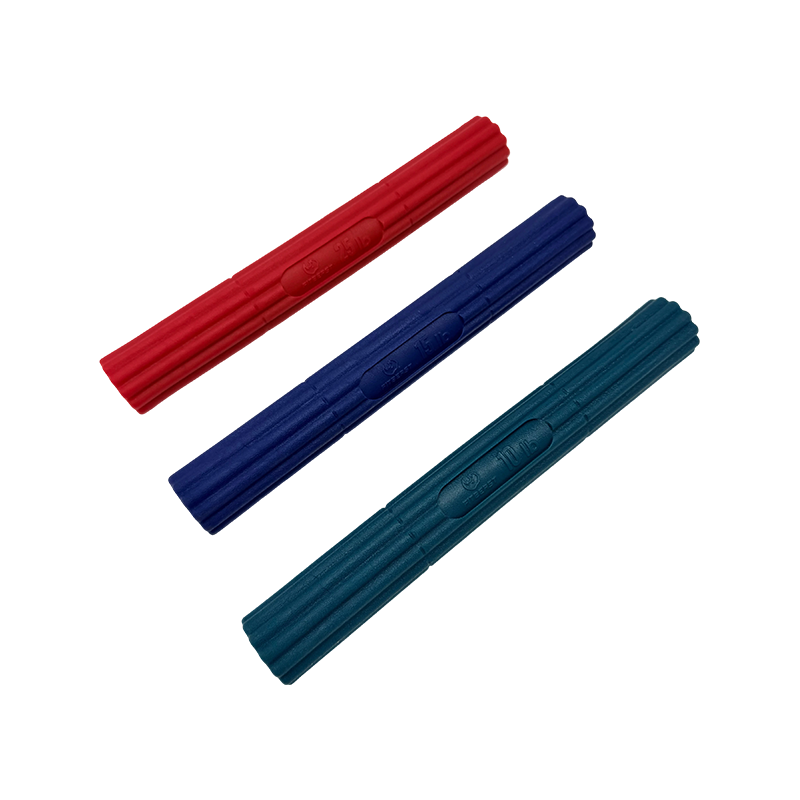
Suzhou Apex Sports Goods Co., Ltd. is China Custom Twist Hand Exerciser Bar Manufacturers and OEM/ODM Flexible Exercise Resistance Bar Factory, established in June 2015, with a factory covering an area of 3,000 square meters, located in the beautiful riverside city - Zhangjiagang. Our company mainly produces indoor fitness sports goods and yoga products. Our main products include yoga wheels, yoga rings, massage sticks, fascia balls, leg clamping massagers, etc. Besides developing standard products, we also offer OEM & ODM services, customizing LOGOs and packaging according to customers' requirements. We provide different products and designs based on the needs of different customers. We have a professional sales team to handle customers' demands. Our products are exported to many countries, such as North America, Japan, South Korea, Germany, Vietnam, etc. and have gained recognition from many customers. Our vision is to become one of the competitive suppliers in China. We are customer-centered, which is why most customers choose us. We offer Twist-n-Bend Flex Bars for sale.

Custom Twist Hand Exerciser Bar Manufacturers
A torque bar is an emerging functional training tool designed to enhance the body’s anti-rotation capability and dynamic core stability. It is typically made of high-elasticity TPR material, featuring a balanced level of rigidity and controllable torsional rebound. By gripping the bar with both hands and applying opposing rotational force, users can precisely activate the oblique muscles, rotator cuff muscles, and deep stabilizers around the spine, effectively improving kinetic chain transmission efficiency during movement.
The training principle of this type of equipment is based on the biomechanics of resisting rotational forces. It can be used for fundamental anti-rotation stability exercises as well as integrated into dynamic functional training sequences. Its compact and lightweight design makes it easy to carry and suitable for a wide range of environments, meeting diverse needs from rehabilitation and posture correction to sports performance enhancement. The yoga torque bar is particularly well-suited for yoga practitioners who need to improve core control, fitness enthusiasts focused on functional training, and sedentary individuals seeking better trunk stability. It serves as an efficient tool that bridges traditional training methods with modern sports science.
About Us
Suzhou Apex Sports Goods Co., Ltd.
News
-
Introduction Yoga has been practiced for thousands of years, and with its growing popularity in the modern world, new tools and accessories are constantly being introduced to enhance the practice. One...
READ MORE -
In modern yoga practice, Cork Yoga Wheel has become an increasingly popular support tool. It not only improves flexibility and core strength but also helps yoga enthusiasts safely perform various chal...
READ MORE -
In the realm of athletic recovery and myofascial health, the Muscle Roller Massage Stick has emerged as a ubiquitous tool. For procurement specialists, fitness brands, and bulk buyers evaluating this ...
READ MORE -
Core sliding discs are used by placing them under your hands or feet on a smooth surface, then performing controlled movements that engage your core, glutes, and stabilizer muscles. They are lightwei...
READ MORE -
Suzhou Apex Sports Goods Co., Ltd. recently announced a comprehensive upgrade of its core OEM (Original Equipment Manufacturing) and ODM (Original Design Manufacturing) services. This enhancement co...
READ MORE -
As global health consciousness reaches an all-time high, home fitness has solidified into a lasting lifestyle. Suzhou Apex Sports Goods Co., Ltd. has keenly captured this market trend and, leveraging ...
READ MORE -
Since its establishment in June 2015, Suzhou Apex Sports Goods Co., Ltd. has steadily marched through eight successful years. Based in the beautiful riverside city of Zhangjiagang, with a modern facto...
READ MORE
Message Feedback
Twist Hand Exerciser Bar Industry knowledge
What are the differences between a Twist Hand Exerciser Bar and traditional grip trainers?
Introduction to rotational training tools and conventional grip devices
In recent years, functional training has gradually shifted from isolated muscle strengthening to integrated movement patterns that emphasize stability, coordination, and kinetic chain efficiency. Within this context, products such as the twist hand exerciser bar, flexible resistance bar, flexible exercise bar, and twist-n-bend flex bars have gained attention as emerging tools designed to improve anti-rotation capability and dynamic core stability. Unlike traditional grip trainers that primarily focus on finger flexion strength, these torsion-based bars introduce rotational resistance and elastic rebound, encouraging deeper neuromuscular engagement.
Traditional grip trainers are typically compact spring-loaded devices used to increase hand squeezing force. They are effective for improving crush grip strength but remain limited in functional carryover to trunk stability or multi-joint coordination. In contrast, the twist hand exerciser bar operates on the principle of resisting rotational torque. By applying opposing forces with both hands, users activate not only forearm muscles but also the obliques, rotator cuff muscles, and deep spinal stabilizers.
Training principles: rotational resistance versus linear compression
The most fundamental distinction lies in the underlying training mechanism. A conventional grip trainer works through linear compression. When squeezed, an internal spring generates resistance opposing finger flexion. The movement is primarily concentric and eccentric within the hand and forearm, with minimal involvement of proximal muscle groups.
By comparison, a flexible resistance bar is based on the biomechanics of resisting rotational forces. When users grip both ends and twist in opposite directions, the bar stores elastic energy and generates controlled torsional rebound. This action requires coordinated stabilization across the wrists, elbows, shoulders, and trunk. The resistance is not limited to a single joint but distributed across the upper kinetic chain.
The flexible exercise bar also allows integration into dynamic functional sequences. For example, anti-rotation holds, controlled oscillations, and slow-release torsion drills promote trunk stiffness and neuromuscular control. These features align more closely with modern sports science concepts emphasizing anti-rotation capacity and spinal stability.
Key contrasts include:
- Grip trainers: isolated finger and forearm compression strength.
- Twist-n-bend flex bars: rotational resistance and whole-chain activation.
- Grip trainers: predominantly static or repetitive squeezing.
- Twist-based bars: dynamic stabilization with elastic feedback.
As a result, while both categories develop hand strength, their neuromuscular impact differs substantially.
Structural design and material composition
Structural design further explains the performance differences. Traditional grip trainers usually contain metal springs or coil mechanisms enclosed in plastic handles. Resistance levels are determined by spring stiffness, and the motion range is relatively short.
In contrast, the twist hand exerciser bar is typically made of high-elasticity TPR material with balanced rigidity and controlled torsional rebound. This material selection ensures durability while maintaining a predictable elastic response. The absence of exposed metal components enhances safety and reduces maintenance requirements.
The twist-n-bend flex bars often feature uniform cylindrical construction with ergonomic surface textures to improve grip security during rotational movement. Because torsion is distributed along the entire shaft rather than concentrated at a hinge point, stress dispersion is more even, which contributes to product longevity.
The following table summarizes structural distinctions:
| Aspect | Twist-based bar | Traditional grip trainer |
|---|---|---|
| Primary material | High-elasticity TPR | Metal spring and plastic |
| Resistance mechanism | Torsional elasticity | Linear spring compression |
| Movement pattern | Rotation and anti-rotation | Squeezing |
| Joint involvement | Wrist, shoulder, trunk | Mainly fingers and forearm |
These structural differences directly influence training adaptability and biomechanical engagement.
Muscle activation and kinetic chain involvement
Traditional grip trainers mainly target the flexor digitorum muscles and related forearm flexors. While this improves crush strength, it does not significantly stimulate stabilizing muscles around the shoulder girdle or spine.
By contrast, the flexible resistance bar requires bilateral coordination and opposing rotational force. This action stimulates the oblique abdominal muscles, transverse abdominis, multifidus, and rotator cuff complex. Because the bar attempts to return to its neutral position, the user must actively control deceleration, which enhances eccentric strength and joint stability.
The flexible exercise bar is particularly effective for developing anti-rotation endurance. During isometric holds, the trunk resists unwanted rotational forces, improving kinetic chain transmission efficiency. This is especially relevant for athletes involved in sports requiring rotational power, as well as individuals seeking posture correction.
The broader activation pattern makes the twist-n-bend flex bars suitable not only for strength development but also for neuromuscular coordination training. Therefore, their function extends beyond grip enhancement into integrated stability conditioning.
Application scenarios: rehabilitation, posture correction, and performance training
Another major difference concerns application range. Traditional grip trainers are often used for:
- Forearm strengthening.
- Grip endurance improvement.
- Basic hand rehabilitation.
While effective within this scope, their functional transfer remains limited.
In contrast, the twist hand exerciser bar supports broader use cases. Its compact and lightweight structure makes it suitable for clinical rehabilitation, yoga sessions, office-based stability training, and athletic conditioning. The torsion-based mechanism is particularly valuable in controlled rehabilitation programs aimed at restoring wrist stability and shoulder integrity.
For yoga practitioners, the flexible exercise bar can enhance core control during standing balance postures. Sedentary individuals benefit from improved trunk stability and reduced postural fatigue. Fitness enthusiasts integrating anti-rotation drills into circuits may find that the flexible resistance bar bridges the gap between isolated strength tools and modern functional systems.
This versatility significantly differentiates twist-based bars from conventional hand grippers.
Manufacturing standards and quality control considerations
Product performance also depends on manufacturing precision and quality control. At Suzhou Apex Sports Goods Co., Ltd., established in 2015 and located in Zhangjiagang, product development emphasizes ergonomics, advanced materials, and strict inspection processes. The company operates within a 5,000 square meter facility and focuses on indoor fitness and yoga products.
When producing tools such as the twist hand exerciser bar, attention is given to torsional consistency, surface texture uniformity, and elastic rebound stability. Each process undergoes inspection to ensure reliable quality. The integrated industry and trade model adopted by Suzhou Apex Sports Goods Co., Ltd. supports supply chain efficiency and stable production capacity.
Beyond standard production, OEM and ODM services are available, allowing customization of logos and packaging according to client requirements. This flexibility is important for distributors seeking differentiated fitness solutions in international markets.
Research and development capability and customization flexibility
The evolution from simple grip trainers to multifunctional torsion bars reflects advancements in sports science and material engineering. Suzhou Apex Sports Goods Co., Ltd. maintains a dedicated research and development team capable of producing according to client drawings or samples. This capability enables continuous optimization of twist-n-bend flex bars in terms of ergonomic contour, resistance grading, and eco-friendly material usage.
The company’s annual production capacity exceeds 20000 tons, supporting varied purchase volumes. During cooperation, requirement confirmation and product selection are conducted through structured communication. After quotation and negotiation, customized design samples are provided for evaluation before mass production.
By integrating design innovation with controlled manufacturing, Suzhou Apex Sports Goods Co., Ltd. ensures that products such as the flexible resistance bar meet international standards and remain competitive in global markets.
Conclusion: functional integration versus isolated strength
In summary, the essential difference between a twist hand exerciser bar and a traditional grip trainer lies in training philosophy and biomechanical scope. Grip trainers focus on localized hand strength through linear compression. Twist-based bars introduce rotational resistance, elastic rebound, and multi-joint stabilization.
The flexible exercise bar supports anti-rotation training, posture correction, rehabilitation integration, and functional conditioning. The twist-n-bend flex bars promote kinetic chain coordination and dynamic trunk control, aligning with contemporary fitness methodologies.
For users seeking comprehensive stability and functional enhancement rather than isolated grip improvement, torsion-based bars provide a broader training spectrum. Selecting between these tools should therefore depend on training objectives, application context, and desired neuromuscular outcomes.
FAQ
Is a twist hand exerciser bar suitable for beginners?
Yes. Beginners can start with lower resistance models and focus on controlled anti-rotation holds before progressing to dynamic movements. Proper instruction ensures safe adaptation.
Can a flexible resistance bar replace traditional grip trainers?
It can supplement but not entirely replace them. While it improves forearm activation, specialized grip trainers may still be preferable for maximal crush grip development.
What industries typically purchase twist-n-bend flex bars?
Common buyers include rehabilitation centers, yoga studios, sports training facilities, and fitness equipment distributors seeking multifunctional stability tools.
How is product quality ensured during production?
Through structured inspection processes, advanced testing equipment, and sample confirmation prior to mass production, as practiced by Suzhou Apex Sports Goods Co., Ltd.
Are customization services available?
Yes. Logo printing, packaging design, and specification adjustments can be arranged through OEM and ODM services to meet diverse market requirements.
-
Become one of the competitive suppliers in China. We are customer-centric, which is why most customers choose us.
-
Contact Us
Email:[email protected] Tel:+86-19942081163 Add:Room B1804, Building A, Huijin Business Center, Yangshe Town, Zhangjiagang City, Suzhou City, Jiangsu Province -
Quick Links
Products About Us Service News Contact Us -
Products
Fitness Yoga Foam Roller Yoga Back Roller Wheel Circle Pilates Ring Muscle Roller Massage Stick Yoga Fascia Massage Ball Fitness Core Slider Pilates Stretch Ring Fitness Resistance Band Twist Hand Exerciser Bar Yoga Hand Exercise Ball Foot Yoga Massage Acupressure Board -
Mobile
Copyright © Suzhou Apex Sports Goods Co., Ltd. All Rights Reserved.Custom
Twist-n-Bend Flex Bars Factory
