

 English
 日本語
 Español

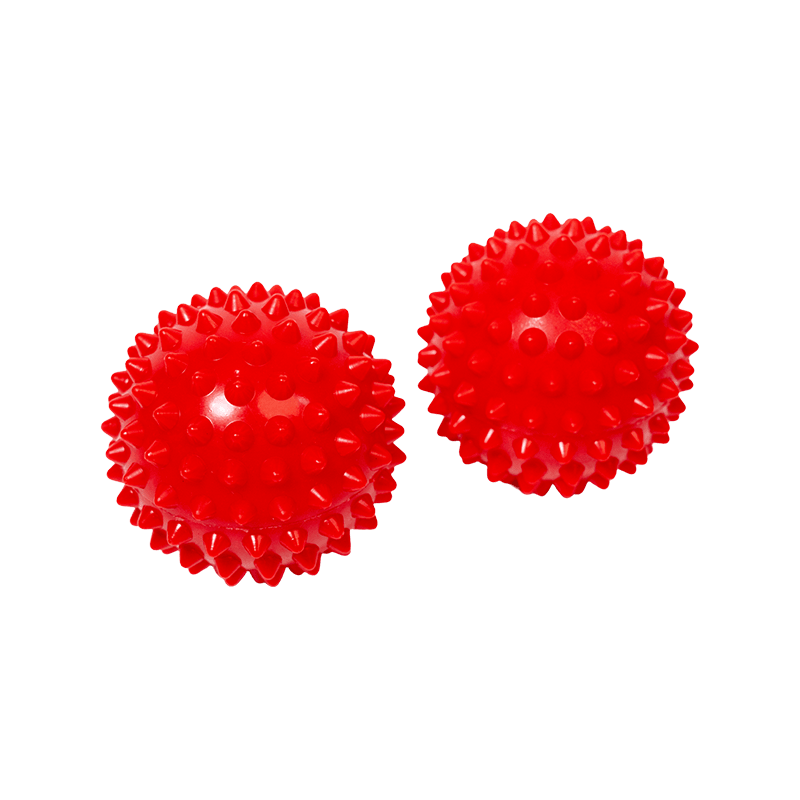
Two 8 cm massage balls can leave the same factory looking identical and still behave differently six months later. One keeps its shape through a winter in an unheated warehouse; the other stiffens, takes a flat spot and splits along the seam during the first deep-tissue session. The mold is rarely to blame, the compound is. The polyvinyl chloride (PVC) properties specified, or never specified, at the ordering stage decide which ball your customers receive.
PVC ranks third in global plastic production behind polyethylene and polypropylene, so compound choices and prices move together across the entire fitness accessories market.
PVC sits inside everything from water pipes to the fascia balls we mold at Suzhou Apex Sports Goods Co., Ltd. in Zhangjiagang, and the same material logic applies to every recovery tool a brand sources. This guide sets out the PVC properties worth writing into a specification sheet when you buy fitness and recovery accessories, with the real numbers attached.
What Are the Key PVC Properties?
The short answer: PVC is rigid by chemistry and tunable by formulation. Nearly every property a buyer cares about is set by the additives mixed into the resin, which is why two PVC parts with identical dimensions can behave more differently than two parts made of different plastics.
Polyvinyl chloride (PVC) is a thermoplastic polymer produced by polymerizing vinyl chloride monomer. Unmodified, it is hard and rigid; plasticizers, heat stabilizers and fillers added during compounding determine its final hardness, flexibility and temperature behavior.
Density near 1.4 g/cm3 makes a PVC ball feel noticeably heavier in the hand than the same size in polypropylene, which suits tools meant to be pressed into muscle rather than rolled lightly. The chlorine built into the polymer chain also makes rigid PVC self-extinguishing in flame tests, with a limiting oxygen index around 45.
Rigid vs Flexible PVC: One Resin, Two Property Sheets
Plasticization is the fork in the road. Unplasticized PVC (PVC-U) is a structural material for pipes and profiles, while plasticized PVC (pPVC) is soft, elastic and tunable almost like rubber. Everything downstream, from pricing to tooling, follows from which side of that fork a part sits on.
| Property | Rigid PVC (PVC-U) | Flexible PVC (pPVC) |
| Density | 1.35 to 1.45 g/cm3 | 1.20 to 1.40 g/cm3 |
| Hardness | Shore D 75 to 85 | Shore A 40 to 95 |
| Tensile strength | 45 to 55 MPa | 10 to 25 MPa |
| Feel and flex | Stiff and structural | Rubber-like, set by plasticizer dose |
| Chemical resistance | Excellent against acids and alkalis | Slightly lower, more solvent sensitive |
| Role in fitness goods | Inner wheel cores, structural parts | Massage balls, grips, padded shells |
One resin, two materials: order PVC without a hardness figure and you will get whatever sits closest to the supplier's stock compound.
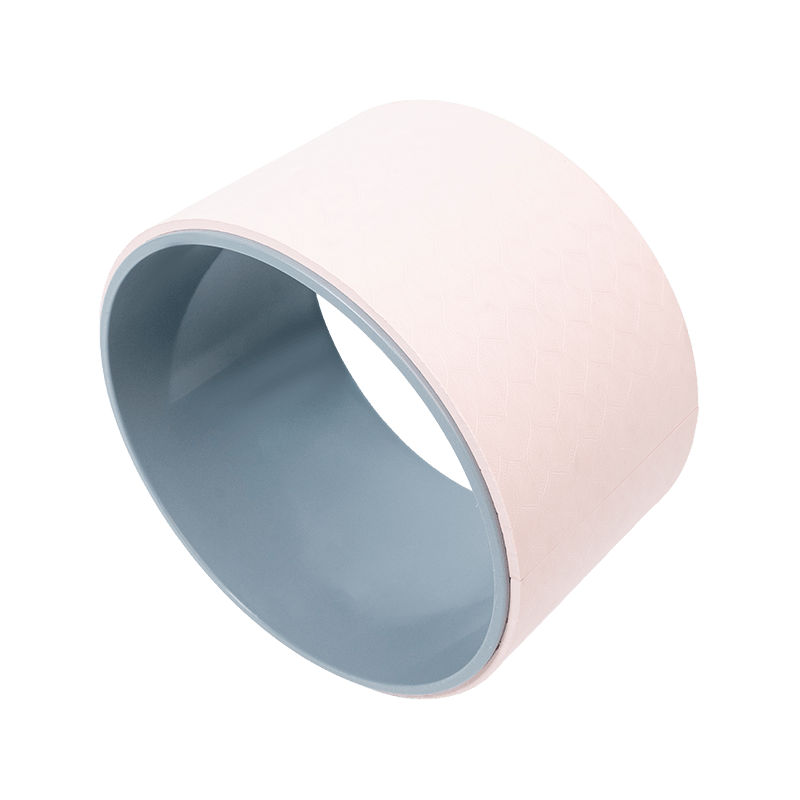
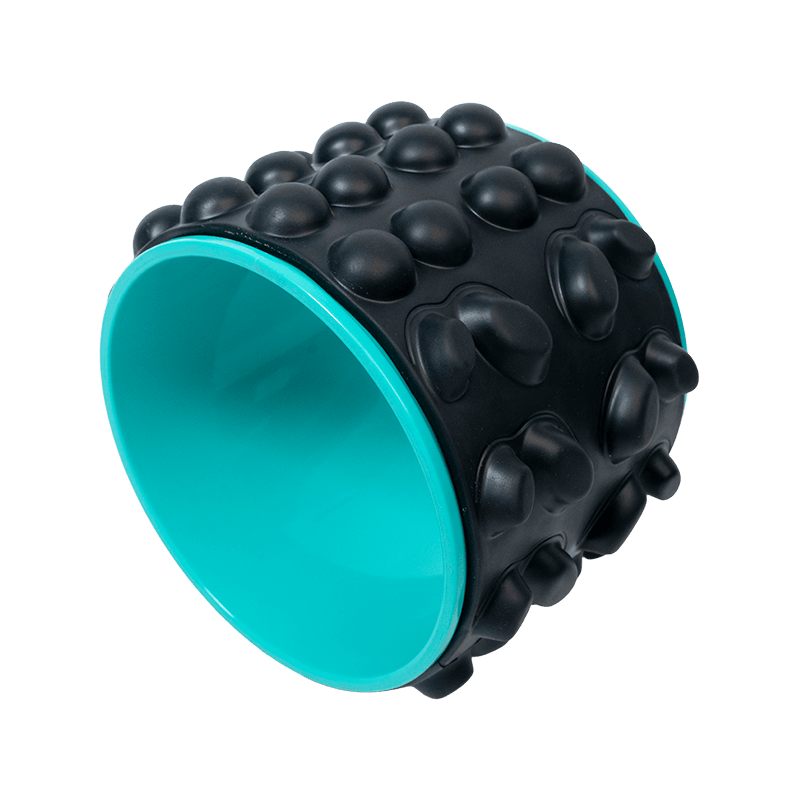
For recovery accessories, flexible grades dominate. For load-bearing parts such as yoga wheel cores, rigid grades or ABS take over, which is why multi-material wheels pair a stiff inner shell with a softer outer surface instead of asking one compound to do both jobs.
How Plasticizer Loading Rewrites PVC Hardness
Plasticizer content is the main hardness dial in flexible PVC. As a working rule of thumb, every extra ten parts of plasticizer per hundred parts of resin (phr) lowers Shore A hardness by roughly five to seven points, so the number on your specification sheet is really a formulation choice.
Typical Shore A hardness of flexible PVC by plasticizer loading
Indicative values for common phthalate-type plasticizers; the exact curve shifts with grade and test method.
Moving a compound from 30 phr to 50 phr can drop it from roughly 92 Shore A to 80 Shore A, the gap between a firm trigger-point ball and a comfortable soothing ball.
The plasticizer family matters as much as the dose. Older phthalate types migrate out of the part over time, so a ball that measures 60 Shore A on the production line can read close to 68 after a year in a hot warehouse. Non-phthalate grades hold hardness better, cost slightly more, and keep shipments compliant with the EU REACH restrictions and the 0.1 percent limits in the US Consumer Product Safety Improvement Act (CPSIA) where those apply.
Temperature and Chemical Limits That Fail in the Field
PVC shrugs off acids, alkalis and nearly all inorganic chemicals, but it has two documented weak points: sustained heat above about 60 degrees Celsius and contact with ketone solvents or aromatic hydrocarbons. Both failure modes show up in warehouses long before they show up in laboratories.
- Cold: rigid grades turn brittle near freezing, while well-plasticized compounds stay workable at around -10 degrees Celsius; state your coldest storage condition explicitly.
- Heat: a sealed container parked in summer sun can exceed 60 degrees Celsius inside, so request heat-ageing data before shipping full containers through hot climates.
- Solvents: acetone and similar ketones swell or dissolve PVC within minutes, which means cleaner choice, not compound failure, explains many tacky or softened samples.
- Sunlight: without UV stabilizers, outdoor exposure yellows the surface within a season; indoor fitness goods are unaffected once stabilizers are in the formula.
Wipe a PVC ball with acetone and the surface softens on the spot; a diluted isopropyl alcohol wipe leaves it unchanged. That two-minute test separates solvent damage from a genuine compound failure when a complaint lands on your desk.
PVC Properties in Massage and Recovery Products
For recovery accessories, PVC wins on cost, tunable hardness and a seamless, easy-to-clean surface, while TPE (thermoplastic elastomer) answers with lower odor, lighter weight and a softer skin feel. The practical question is not which material is better overall but which properties each SKU actually needs.
Flexible PVC
- Lower cost per part at volume
- Hardness tunable from 40 to 95 Shore A
- Seamless one-piece molded finish
- Firm, springy rebound for deep pressure
TPE alternative
- Lighter weight at the same size
- Very low odor out of the box
- Softer, grippier skin feel
- Phthalate-free by formulation
We mold both materials, and the overlap is smaller than most buyers expect. Our overview of yoga fascia massage balls shows how the same ball geometry changes character as the resin changes. The PVC version below is the workhorse choice for soothing-pressure SKUs.
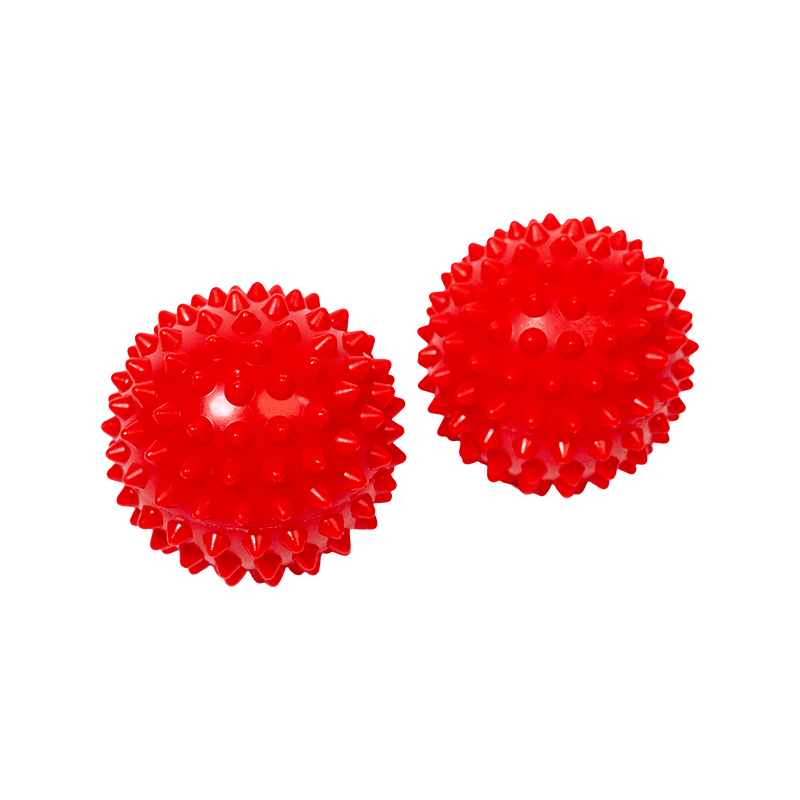 PVC Soothing Massage BallThe evenly distributed rounded nodules on the PVC massage ball provide gentle, widespread surface stimulation during rolling, promoting local blood circulation and lym...View Product →
Where a program calls for a lighter part and a softer first touch, the TPE counterpart covers it inside the same ball family, so a single supplier can serve both ends of the recovery line.
 TPE Peanut Double Fascia Massage BallWith its unique double-ball design, this tool precisely replicates ergonomic curves and is specifically designed to relieve tension in linear muscle groups along the s...View Product →
Hardness is a specification, not a feeling: put the Shore A target and its tolerance on the purchase order, and the PVC versus TPE argument mostly settles itself.
A Five-Point Sourcing Checklist for PVC Fitness Components
Most PVC complaints trace back to five specification gaps that cost nothing to close before tooling starts. Walk this list with any supplier of muscle release tools and similar accessories, and ask for the golden sample to answer each point in writing.
- Lock hardness with a tolerance. Write, for example, Shore A 55 with a 3-point tolerance, measured with a durometer after 24 hours of conditioning.
- Name the plasticizer family. Request non-phthalate grades and attach REACH and CPSIA test reports to the golden sample.
- Set the low-temperature bar. Require no cracking and no permanent flat spot after 24 hours at your coldest realistic storage temperature.
- Define the heat ceiling. Accept no more than a 5-point hardness shift after 168 hours at 70 degrees Celsius to survive container shipping.
- Specify surface and scent. Fix the gloss level, seam quality and an agreed odor grade, since smell drives more soft-plastic returns than any other defect.
Five lines on a purchase order prevent the majority of PVC field failures, and none of them adds more than a rounding error to unit cost.
PVC Properties: Frequently Asked Questions
Is PVC safe for skin-contact fitness products?
Yes, when the compound uses compliant plasticizers and stabilizers. Ask for REACH and CPSIA test reports against the 0.1 percent phthalate limits and for documentation covering your destination market; non-phthalate flexible grades are a standard offering from established factories.
What Shore hardness should a PVC massage ball be?
Soothing and recovery balls typically sit between Shore A 45 and 65, while firmer trigger-point and deep-tissue tools run from 70 to 90. Choose by body area and the pressure the user can apply, not by a single universal number.
Does PVC crack in cold weather?
Rigid PVC can turn brittle near freezing, but flexible compounds designed for low-temperature use stay serviceable at -10 degrees Celsius and below. Cold cracking in the field almost always means the compound was sourced without a low-temperature requirement.
How do buyers verify hardness on incoming samples?
Measure with a Shore A durometer after 24 hours of conditioning at room temperature, take at least three readings across the surface and compare the average against the specification rather than a single spot reading.