

 English
 日本語
 Español

Stand side-on to a full-length mirror with your arms relaxed: if your belt line slopes toward the floor at the front, your lower back caves into a deep arch, and your stomach pushes forward despite regular training, you are looking at the classic silhouette of anterior pelvic tilt. Prolonged sitting is the most common cause, and when the forward rotation grows large enough to reshape posture and drive recurring back or hip discomfort, practitioners start calling it severe anterior pelvic tilt.
What Severe Anterior Pelvic Tilt Actually Means
Severe anterior pelvic tilt is a pronounced forward rotation of the pelvis on top of the thigh bones, big enough to deepen the lower back arch and visibly change how you stand.
A small forward tilt is normal: common reference ranges put everyday standing tilt between roughly 7 and 15 degrees. Severe describes tilt that pushes well past that range and brings companions, including a back that aches after standing, hip flexors that never feel long, and a stomach that protrudes despite low body fat. Because the pelvis links spine to legs, everything above and below compensates around the rotation.
Why Severe Does Not Automatically Mean Damaged
A large tilt by itself is not a diagnosis; severity only matters when it is paired with symptoms and movements that reproduce them.
The evidence is calmer than social media suggests. A systematic review of non-surgical interventions for excessive anterior pelvic tilt found the link between tilt and low back or hip pain weak and inconsistent, and noted that exercise programs struggle to change pelvic angles measurably. Orthopedic clinicians have likewise pushed back on posture overdiagnosis, pointing out that many pain-free people carry a visible tilt for decades.
Treat severe tilt as a trainable movement pattern, not a disease. The goal is not a perfect pelvis on an X-ray; it is a pelvis you can control under load, without pain.
The useful question is not how tilted you are but whether your hips and trunk can do their jobs. If they cannot, the routine below addresses it. If you feel nothing, train anyway, but skip the anxiety.
A 60-Second Self-Check Before You Start
You can screen your own tilt at home with three quick tests, and none needs equipment.
- Wall test: stand with heels about 10 cm from a wall. If your whole forearm slides behind your lower back without effort, the lumbar arch is exaggerated; a flat hand should be enough.
- Side photo test: have someone photograph you in relaxed standing. A belt line dipping at the front plus a forward-shifted stomach suggests a strong tilt.
- Modified Thomas test: on a firm bed, hug one knee to your chest and let the other leg hang. If the hanging thigh lifts off the surface, that hip flexor is short.
These tests screen, they do not diagnose. Sharp pain during any of them is your cue to get assessed before starting corrective work.
The Three-Part Fix for Severe Anterior Pelvic Tilt
Severe tilt responds to a repeatable weekly cycle that calms the overactive front of the hip, then rebuilds the glutes and deep abdominals that hold the pelvis level.
- Hip flexors: the iliopsoas and rectus femoris, shortened by long sitting hours
- Lower back extensors: the erector spinae, holding the deep arch
- Glutes: gluteus maximus, the main hip extender
- Deep abdominals: transverse abdominis and obliques, which stack ribs over pelvis
Therapists call this pattern lower crossed syndrome, first described by researcher Vladimir Janda. The fix runs in three steps.
Step 1: Release the front of the hip
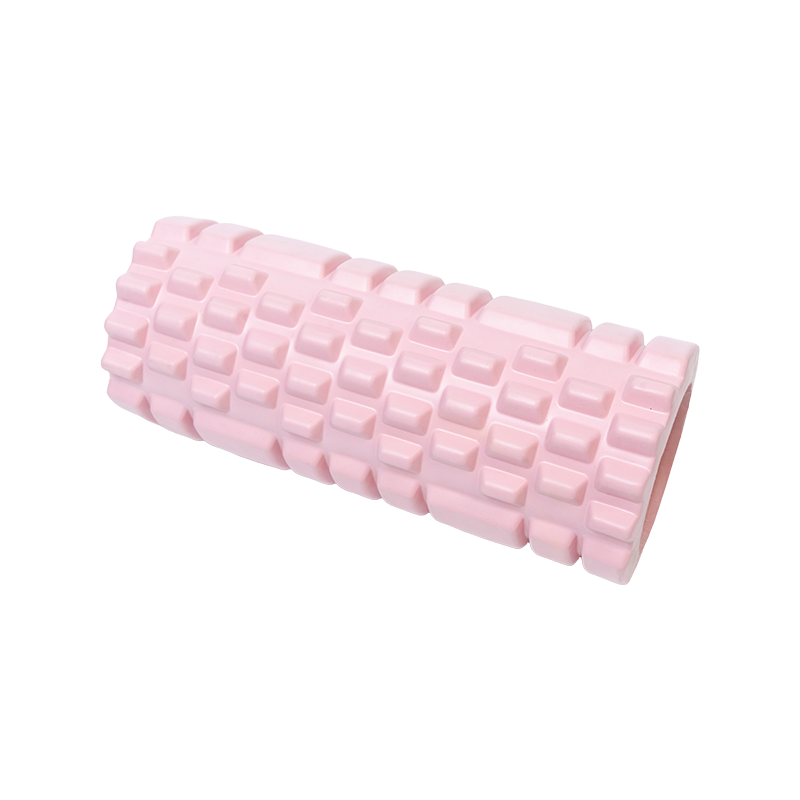
Roll each thigh slowly for 60 to 90 seconds, pausing on tender spots along the quad and where the rectus femoris crosses the hip crease. Research on self-myofascial release shows small but reliable short-term gains in range of motion, exactly what you want before stretching.
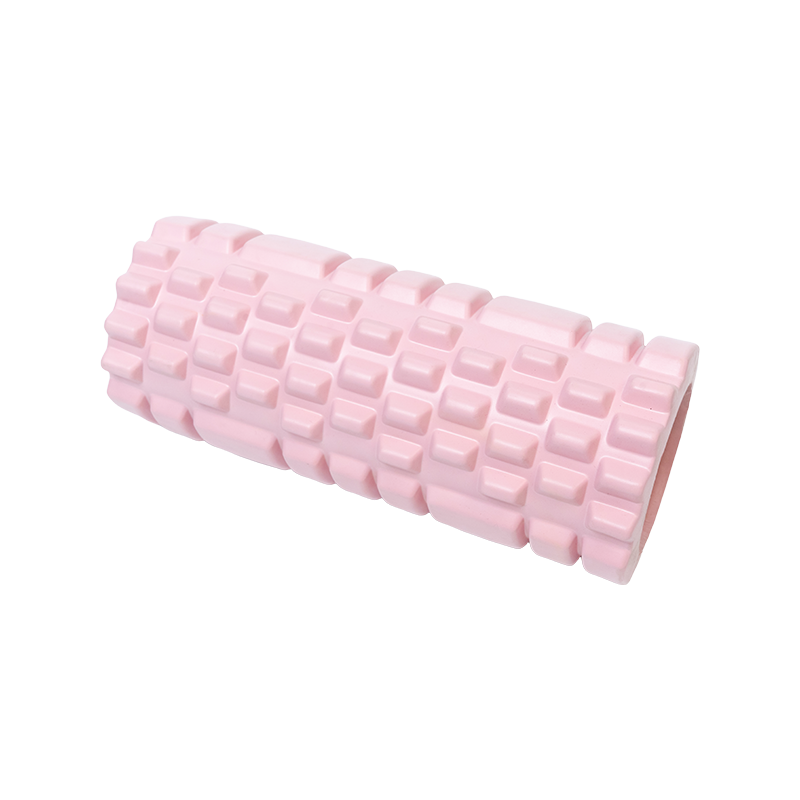 Standard Bumpy Relief Yoga Foam Roller - 14x33cm (Full Body MassageBeginner)This product features evenly distributed standard raised point textures, aiming to provide stable and systematic full-body fascia combing. Each raised point serves as ...View Product →
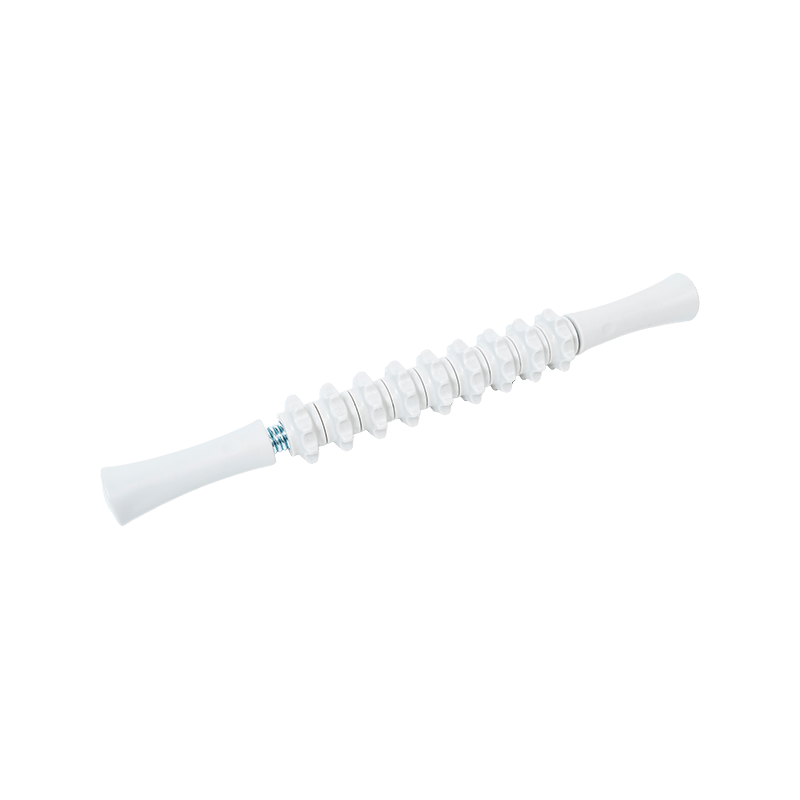
For pinpoint pressure on the rectus femoris and the TFL region beside the hip bone, a four-ball stick lets you hold one spot and add small knee bends until stubborn tissue lets go.
 Precision Press ABS Four-Ball Localized Massage StickDesigned for targeted and precise therapy, this model features four ABS beads arranged in a compact structure that concentrates pressure on a single point. This is per...View Product →
Step 2: Stretch what sitting shortened
The half-kneeling hip flexor stretch is the workhorse. Kneel on one knee, squeeze the glute on the stretching side to tuck the tailbone under, then shift your hips forward until the front of the hip pulls cleanly. Hold 30 seconds, three rounds per side. The glute squeeze is the whole point: it pins the pelvis into posterior tilt while the short tissue lengthens.
Step 3: Strengthen what went quiet
Glute bridges, three sets of twelve with a two-second squeeze at the top, rebuild the extensors that hold the back of the pelvis down. Dead bugs and body saws train the deep abdominals to pull the ribcage over the pelvis; on every rep, exhale hard and draw the lower ribs toward the hip bones. Sliding discs make both drills harder by removing floor friction, so the trunk does all the stabilizing, which is why core training sliders are worth owning.
 Non-Slip Octagonal Training Core SliderThe octagonal geometric core slider brings innovation to traditional slider training, with each corner serving as a natural force control point, enabling precise aware...View Product →
Consistency beats intensity. Three 25-minute sessions spread across the week outperform one long weekend workout, because the pelvis learns position through repeated reps, not occasional effort.
| Muscle group | State in severe tilt | Priority action | Practical tool |
| Hip flexors (iliopsoas, rectus femoris) | Tight, overactive | Release, then stretch daily | Roller, massage stick, half-kneeling stretch |
| Lower back extensors | Overactive | Relearn position, stop arching into pain | Dead bugs with exhale cue |
| Gluteus maximus | Weak, inhibited | Strengthen 2-3 times weekly | Glute bridges, hip thrusts |
| Deep abdominals | Weak | Train rib-to-pelvis control | Body saws, slider walkouts |
What Changes Week by Week, and How to Measure It
Expect the first change, position awareness, within about two weeks, and measurable postural change inside the six-to-twelve-week window if the routine holds.
Mild to moderate cases typically improve within 6 to 12 weeks of focused corrective exercise, a timeline orthopedic clinicians quote routinely, and severe cases usually need the long end of that range or slightly more. Relief arrives before appearance: easier standing and less end-of-day back ache commonly show up around weeks three and four, while the mirror catches up later. Re-shoot your side photo every four weeks under identical light and distance, and judge progress by the belt line and rib position rather than daily stiffness.
How to split 180 weekly minutes of corrective work
Suggested allocation of roughly three hours per week across the four corrective components.
When to Stop Self-Treating and Get Assessed
Corrective exercise is low risk, but certain signs mean the pelvis is the wrong suspect and a professional assessment comes first.
- Numbness, tingling, or weakness running into either leg
- Pain that wakes you at night, or pain that started after a fall or accident
- Loss of bladder or bowel control, which needs same-day medical care
- Low back pain that has not improved after six weeks of consistent work
Tilt is rarely the only finding. A clinician can screen the sacroiliac joints, hip joint shape, and disc-related causes that no self-directed program can rule out.
Frequently Asked Questions About Severe Anterior Pelvic Tilt
Can severe anterior pelvic tilt be corrected without surgery?
Yes. Surgery is essentially never performed for pelvic tilt itself, because the pelvis is a moving joint complex rather than a fixed deformity. Stretching, strengthening, and motor-control work remain the first-line approach, and most severe cases respond within three to six months.
How long does it take to fix severe anterior pelvic tilt?
Mild to moderate tilt typically improves within 6 to 12 weeks. Severe tilt usually needs the far end of that window, and lasting change depends on whether you keep training the glutes and deep core afterward.
Which muscles are weak in severe anterior pelvic tilt?
The gluteus maximus and the deep abdominals, mainly the transverse abdominis and obliques, are the weak links, while the hip flexors and lower back extensors sit tight and overactive. Strengthening the first pair matters more over the long run.
Is my back pain really caused by anterior pelvic tilt?
Not automatically. Research shows the link between tilt and pain is weak, so tilt is one plausible contributor among several. If pain persists past six weeks of consistent work, get a diagnosis that rules out hip joint, sacroiliac, and disc-related causes.
Severe anterior pelvic tilt is a training problem before it is a medical one: release the front of the hip, wake up the back of it, and give the routine eight honest weeks.