

 English
 日本語
日本語 Español
Last month a buyer sent us a request for quotation for 5,000 massage balls and wrote one line under Material: PVC. Two emails later we were still clarifying rigid versus flexible compound, plasticizer system, target hardness and which compliance reports the destination market would demand. That exchange captures the real problem with the term.
PVC material describes a family of compounds that can behave like a window profile at one end and a gel-soft grip at the other. This guide explains how polyvinyl chloride is built, where it earns its place in yoga and fitness equipment, and the exact checks our production team at Suzhou Apex Sports Goods Co., Ltd. runs before a compound reaches a mold.
What PVC Material Is at the Polymer Level
PVC material is polyvinyl chloride: a thermoplastic polymer of vinyl chloride monomer that carries roughly 57 percent chlorine by weight and ships as either a rigid or a plasticized flexible compound.
The chlorine comes from industrial salt through electrolysis, paired with ethylene from oil or gas. That high chlorine share makes PVC naturally flame resistant and denser than polyethylene or polypropylene. Two working forms leave the same resin:
Rigid PVC (uPVC)
No plasticizers. Stiff and dense at about 1.4 g/cm3, reading Shore D 70-85. Used for pipes, window profiles, signage and payment cards.
Flexible PVC (pPVC)
20 to 50 parts of plasticizer per 100 parts of resin. Falls anywhere from Shore A 40 to 90. Used for grips, tubing, cable sheaths and soft massage tools.
Why Flexible PVC Material Dominates Massage Balls and Grips
Flexible PVC material wins hand-held recovery tools because plasticizer loading lets a factory tune hardness in fine steps while keeping a sealed surface that wipes clean after a sweaty session.
Because the softness lives in the recipe rather than the tool, one mold can serve a firm trigger-work ball and a soft comfort ball with only a compound change. Texture also holds a sharper edge in PVC, which matters on bumpy massage surfaces. The closed, non-porous skin sheds water and oil, so it resists odor and cleans with a damp cloth, unlike open-cell foams that soak up sweat.
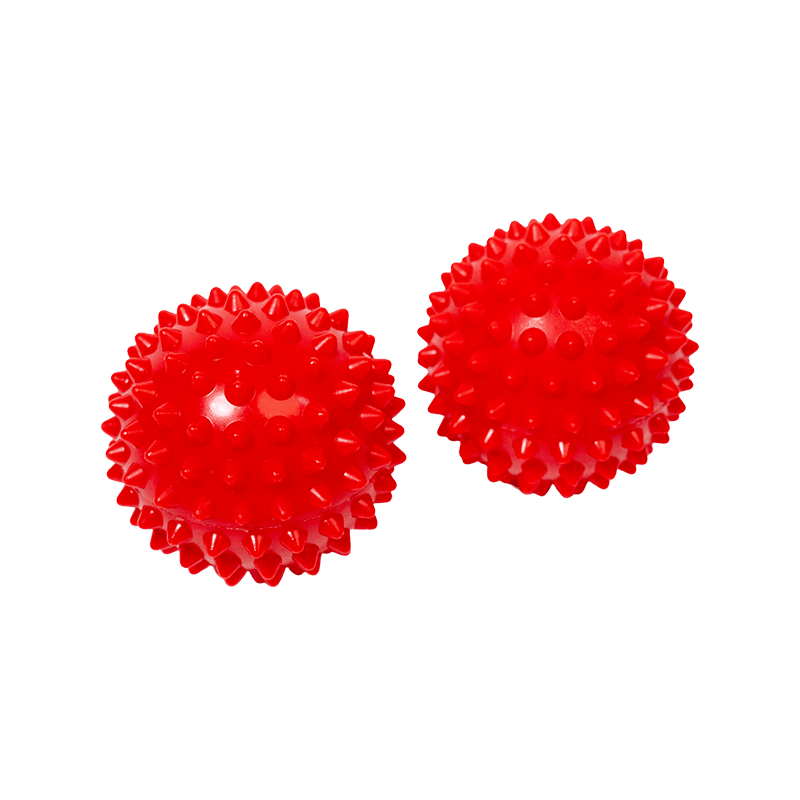
Our own PVC soothing massage ball is molded from a soft flexible grade selected for slow, controlled compression under body weight, and it sits alongside our EVA and TPE fascia release tools, where PVC keeps the sharpest texture detail and the lowest unit cost at volume.
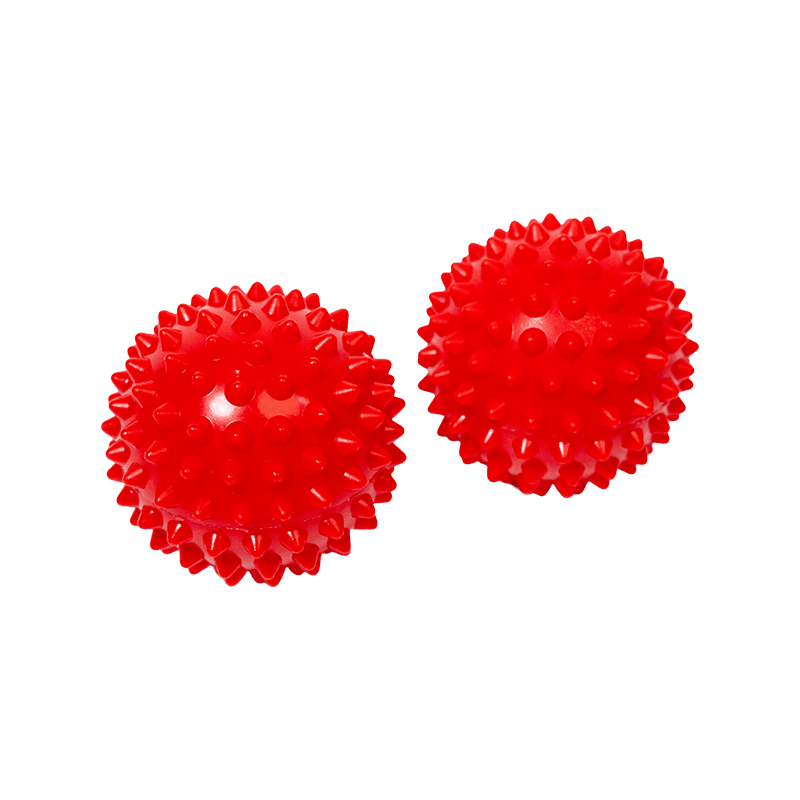 PVC Soothing Massage BallThe evenly distributed rounded nodules on the PVC massage ball provide gentle, widespread surface stimulation during rolling, promoting local blood circulation and lym...View Product →
PVC Material vs TPE vs EVA in Recovery Equipment
For yoga and recovery gear, PVC material buys the lowest unit cost and the toughest sealed surface, TPE buys rebound and easier eco positioning, and EVA buys the lightest weight. The product brief decides, not habit.
| Property | Flexible PVC | TPE | EVA foam |
| Hardness window | Shore A 40-90 | Shore A 0-95 | Shore A 25-55 |
| Rebound | Moderate | High | Low |
| Surface | Sealed, wipes clean | Sealed, slight grip | Open cell, absorbs sweat |
| Density (g/cm3) | 1.2-1.4 | 0.9-1.2 | 0.05-0.25 |
| Unit cost at volume | Lowest | Medium | Low to medium |
| Watch-outs | Plasticizer compliance | Grade names not standardized | Permanent compression over time |
Where rebound decides the product, we steer buyers toward TPE. A wheel loaded under spine weight must flex and recover thousands of times, which is exactly the job of the TPE wheel below; our material guide to TPE yoga wheels explains those hardness grades in detail.
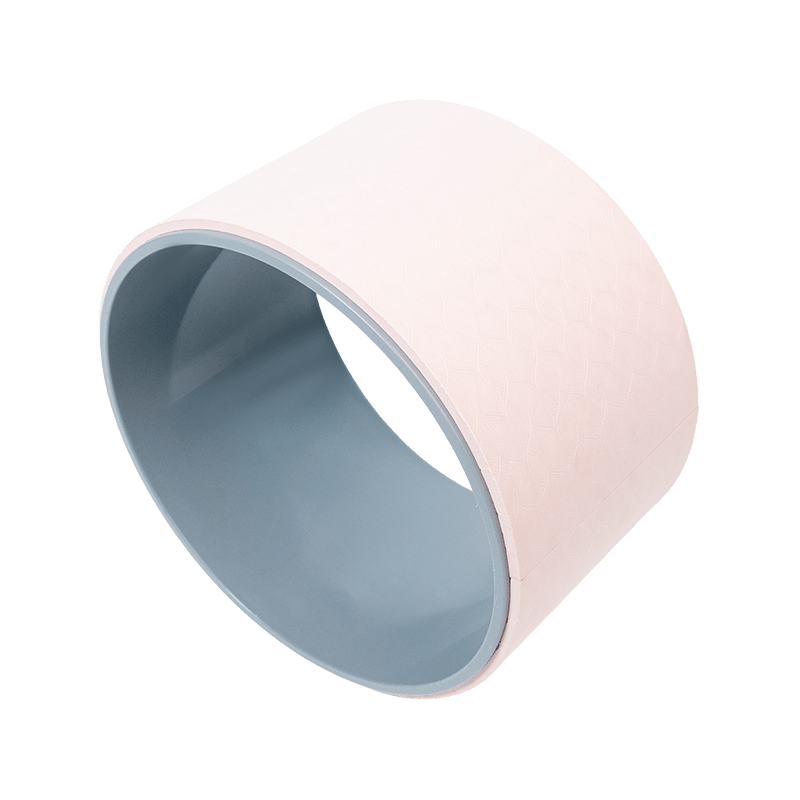 TPE Standard Back Stretch Yoga WheelThis yoga wheel is an ideal choice for both studio and home practices. Featuring a PP core and a TPE eco-friendly outer layer, the 1600-gram balanced design ensures bo...View Product →
Compliance Checks That Separate Safe PVC from Risky Stock
Additives decide whether PVC material is safe, so buyers should write phthalate-free formulations into the specification and demand batch-linked test reports before tooling starts.
The resin itself is a stable polymer; scrutiny falls on the blend. Legacy ortho-phthalate plasticizers such as DEHP, DBP and BBP, and old lead or cadmium heat stabilizers, are restricted across major markets. Modern lines run calcium-zinc stabilizers with alternatives such as DOTP or DINCH. Four checks keep a project safe:
- Name the screen in the spec: a 6P or 10P ortho-phthalate panel covering DEHP, DBP, BBP, DIBP, DINP and DIDP.
- Confirm the stabilizer system is calcium-zinc, never lead-based, and get it on the datasheet in writing.
- Match the destination rules: EU REACH caps four phthalates at 0.1 percent by weight in plasticized articles, and US children's product rules are stricter still.
- Require batch numbers on every report, because a type test proves the formulation while a batch test proves your shipment.
How Hardness Tolerances Are Controlled on the Factory Floor
In production, PVC material quality is a hardness and surface story, verified with a durometer, a wipe test and a conditioning routine rather than paperwork.
Our inspectors take Shore A readings at set intervals on every run and hold tolerance to plus or minus 3 to 5 points. Temperature swings the readings: flexible PVC stiffens in cold storage and softens above roughly 60 degrees Celsius, which is why samples are conditioned for 24 hours at room temperature before anyone judges the feel. The chart shows why one word like "soft" can span very different compounds:
When to Specify PVC Material and When to Substitute
Specify PVC material when unit cost, grip and a wipe-clean surface drive the brief; move to TPE or EVA when rebound, weight or eco positioning lead it.
Specify PVC when
- Unit cost must stay low at volume and the award is decided on price.
- The surface meets sweat daily and must wipe clean without soaking.
- Sharp, durable texture detail sells the product, as on bumpy massage balls.
- The tool is hand-held, so its higher density reads as quality, not bulk.
Substitute when
- Marketing leads on eco claims, where TPE or cork grades land better.
- The product needs high rebound, such as yoga wheels and training bands.
- Weight rules the design, which is where EVA foam rollers win on freight too.
- Heat exposure is routine, pushing the choice to higher-temperature grades.
Our standard bumpy foam roller shows the substitute case in practice: light enough to cut shipping cost, gentle enough for beginners, and priced for starter kits.
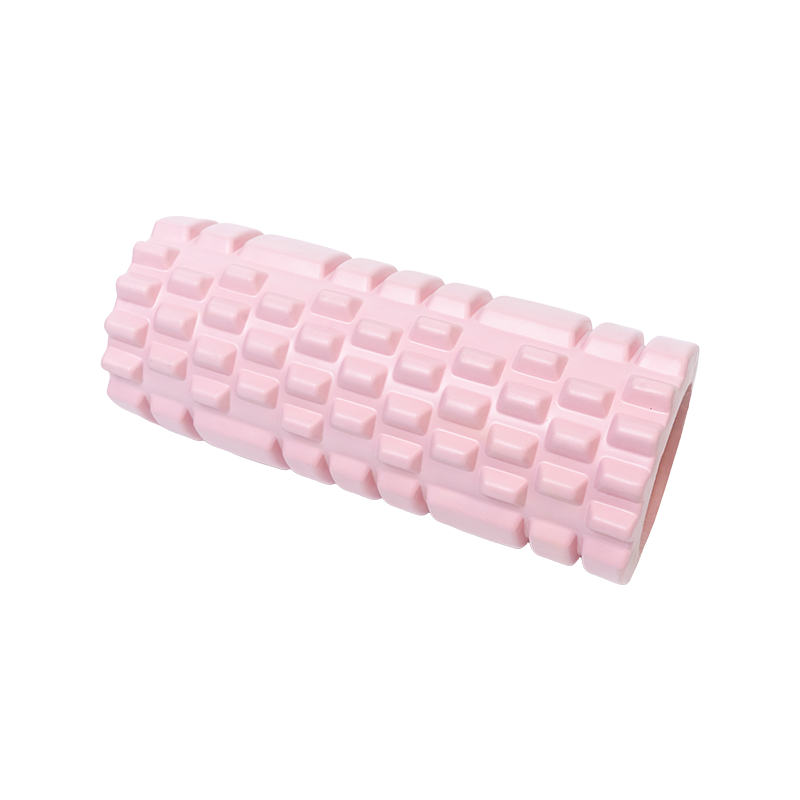 Standard Bumpy Relief Yoga Foam Roller - 14x33cm (Full Body MassageBeginner)This product features evenly distributed standard raised point textures, aiming to provide stable and systematic full-body fascia combing. Each raised point serves as ...View Product →
PVC Material FAQs
Is PVC material safe for skin-contact massage products?
Yes, when the compound uses phthalate-free plasticizers, calcium-zinc stabilizers and documented compliance for the destination market. The polymer itself is used in medical tubing; the risk sits in the additive package, which is why batch-linked reports matter more than marketing copy.
How is PVC material different from TPE?
PVC is a single polymer whose flexibility comes from added plasticizers, while TPE is a family of blends whose softness is built into the polymer chain. TPE rebounds faster and supports lighter eco positioning; PVC costs less, textures sharper and wipes cleaner.
Does PVC material harden or crack over time?
Plasticizer migration can gradually stiffen flexible PVC across years, especially with heat and sunlight. Specifying low-migration plasticizers and storing products away from hot cars and direct sun keeps the feel stable for a normal service life.
Can PVC material be recycled?
Yes. Both rigid and flexible grades can be mechanically recycled into stable secondary products, and dedicated streams exist for construction and industrial scrap. For consumer goods, the practical route is recovering clean production scrap inside the factory, which is standard on our molding lines.